Aesthetic Eyes Photo Prompts for Stunning Shots
Some photos are remembered for one thing only, the eyes. This page collects our aesthetic eye prompt collections, close ups and portraits where the eyes carry the whole mood of the picture. You will find film style vintage looks, extreme macro shots that show every colour in the iris, soft dreamy styles, dark and bold styles, and emotional and happy looks too. Open any collection below, copy a prompt, and use it with your own photo in ChatGPT or Gemini to restyle your picture around its strongest feature.
What Makes an Eye Photo Aesthetic
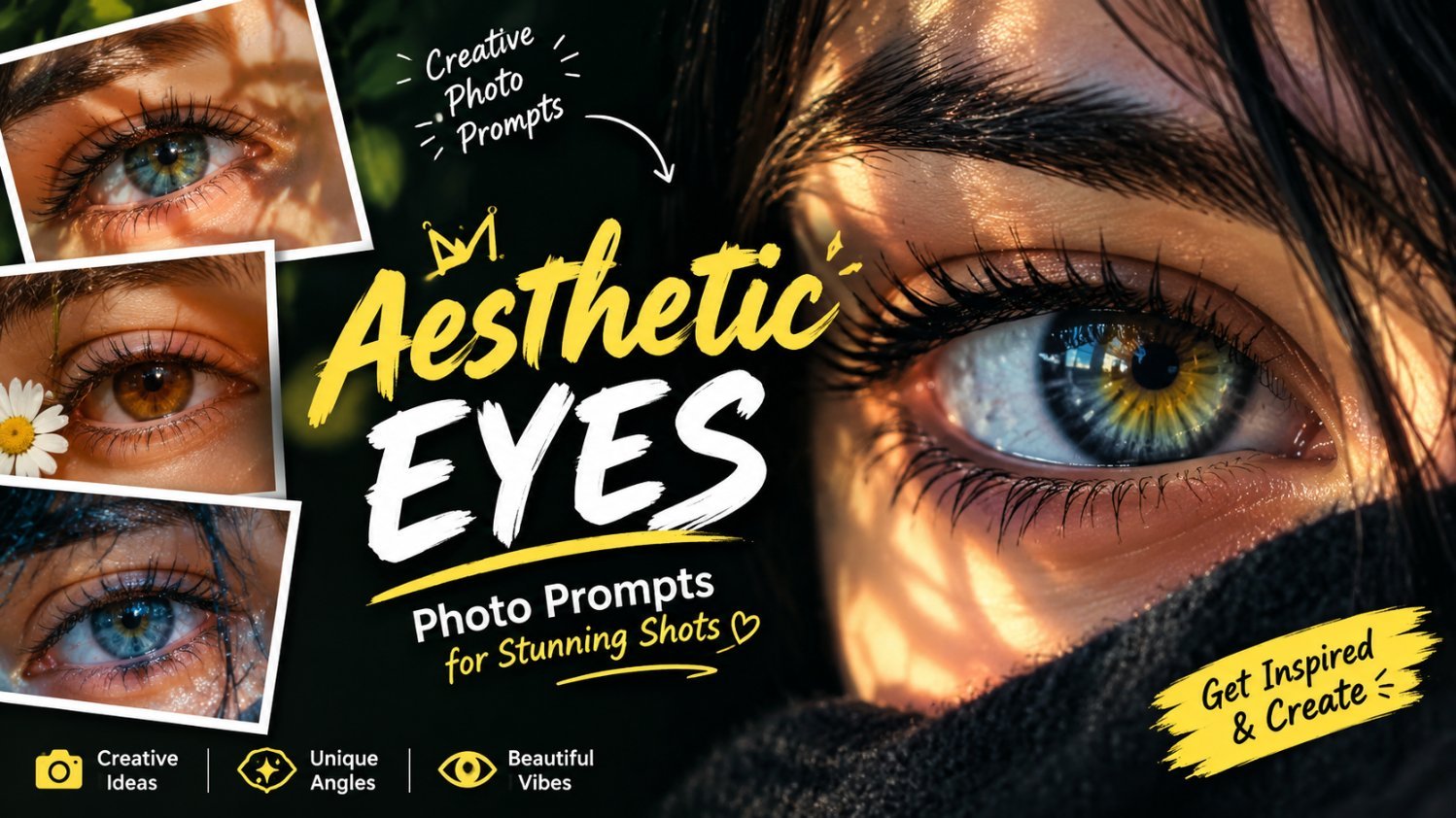
An aesthetic eye photo is a close up or a portrait where the eyes are planned, not accidental. The iris colour is clear, the light lands in the eye as a bright catchlight, the lashes and brows are sharp, and the crop leaves out everything that does not serve the mood. Ordinary selfies rarely do any of this on purpose, which is why these photos stand out in a feed full of full face pictures. The prompts in these collections are written to build exactly those details into your photo, the light, the crop, the colour and the feeling, while your eyes stay your own.
Why Eye Close Ups Work So Well
People read eyes before they read anything else in a picture, so a photo that leads with the eyes holds attention longer than a wide shot. A close up also hides the usual selfie problems, a messy background, bad room light, an outfit you did not love, because the frame is filled with the one detail that matters. That is why eye photos work as profile pictures, story covers and quiet, emotional posts where a full portrait would say too much. Each collection on this page takes that one idea in a different direction, from soft and dreamy to dark and bold.
The Four Details Every Great Eye Photo Gets Right
First, light. A window or a soft lamp in front of the face puts a catchlight in the eye and makes it look alive. Second, sharpness. The eye must be the sharpest point in the frame, sharper than the hair, the skin and the background. Third, colour. Whether it is your natural iris, a macro pattern or a fantasy shade, the colour has to be clean and rich, never muddy. Fourth, mood. A single clear feeling, dreamy, sad, fierce or joyful, beats a mix of everything. The prompts in these collections are organised by exactly these details, so the style you pick decides which detail leads.
Cinematic & Vintage Eyes Prompts
View Prompts →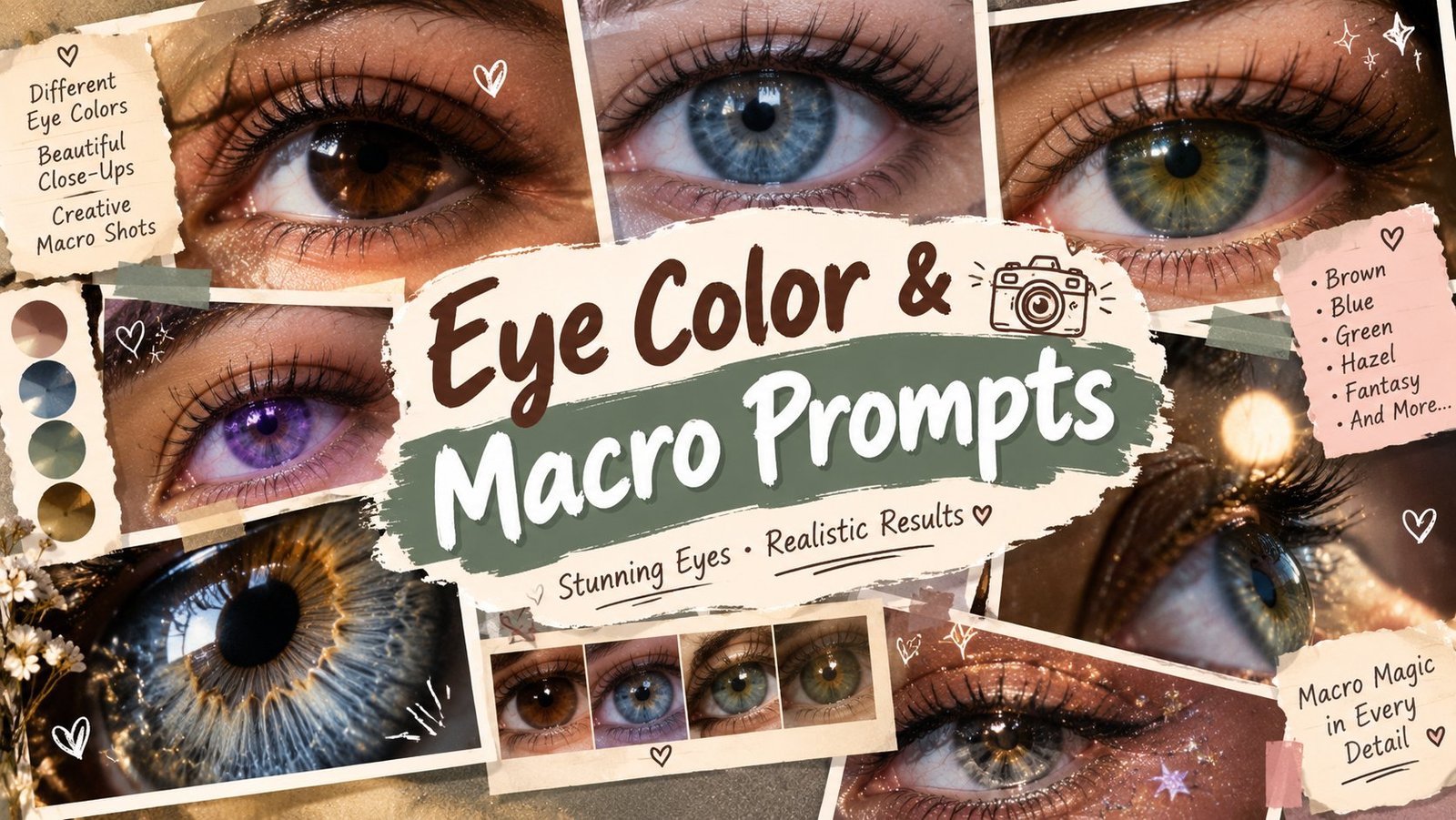
Eye Color & Macro Prompts
View Prompts →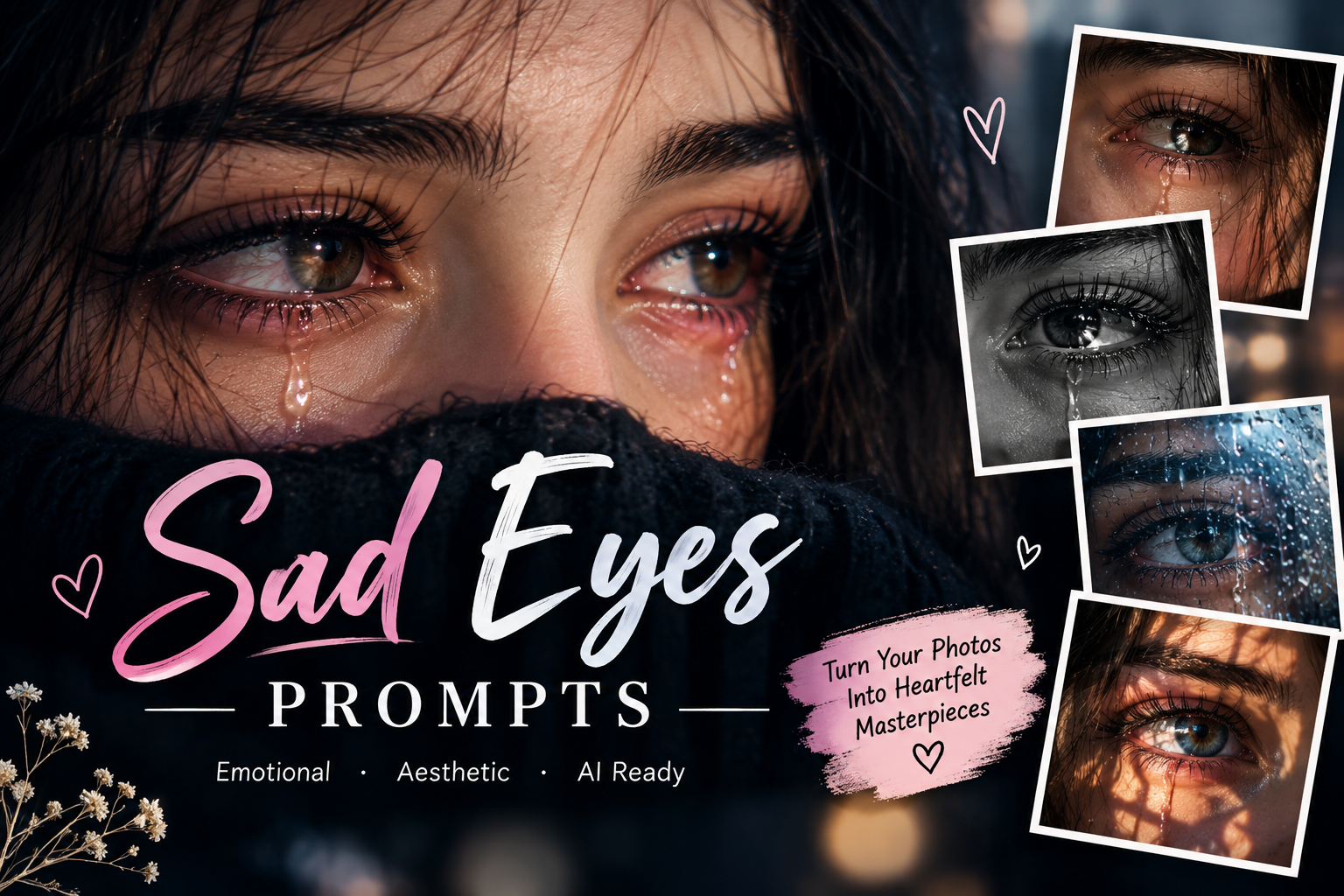
Sad Eyes Prompts
View Prompts →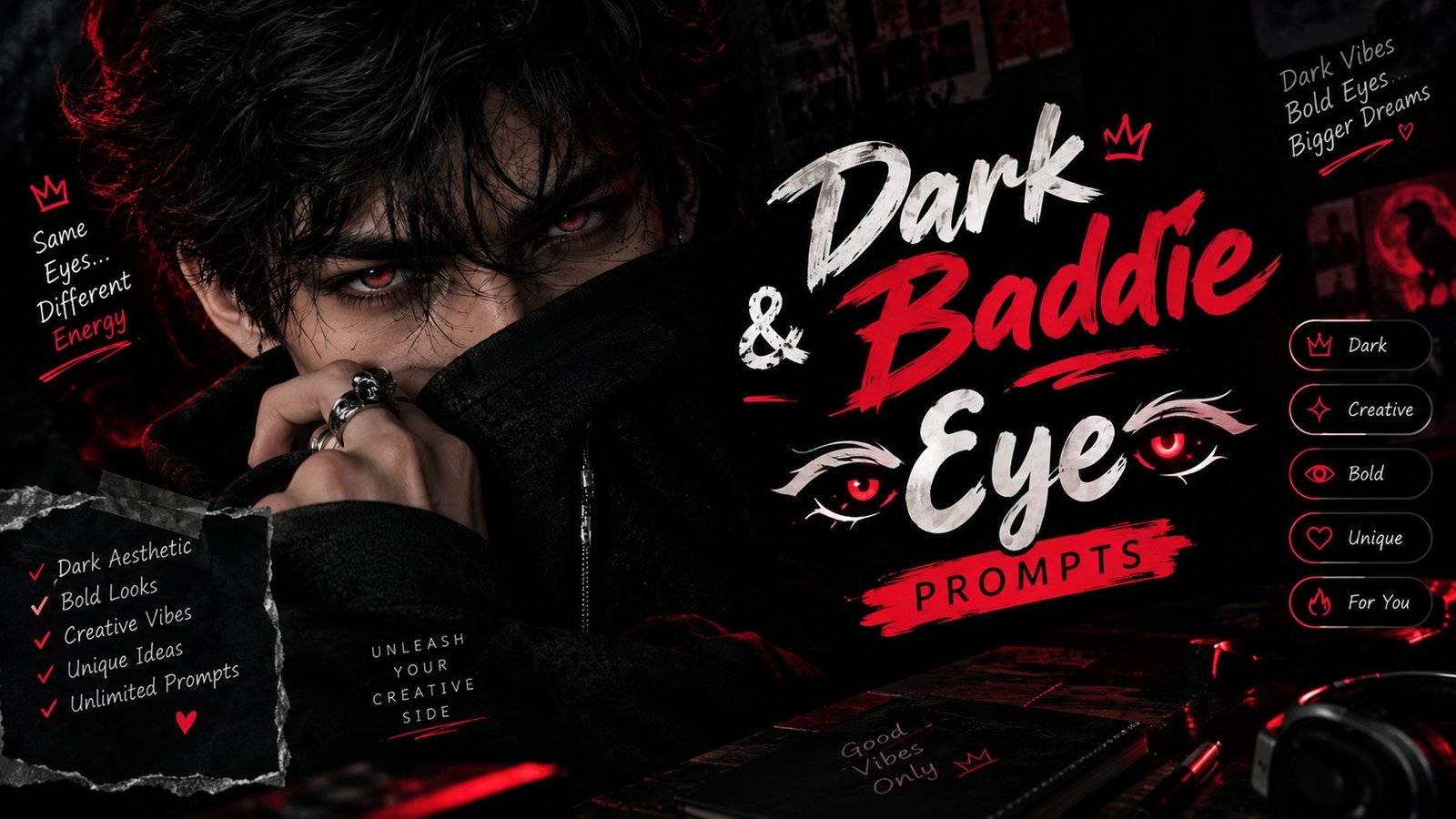
Dark & Baddie Eye Prompts
View Prompts →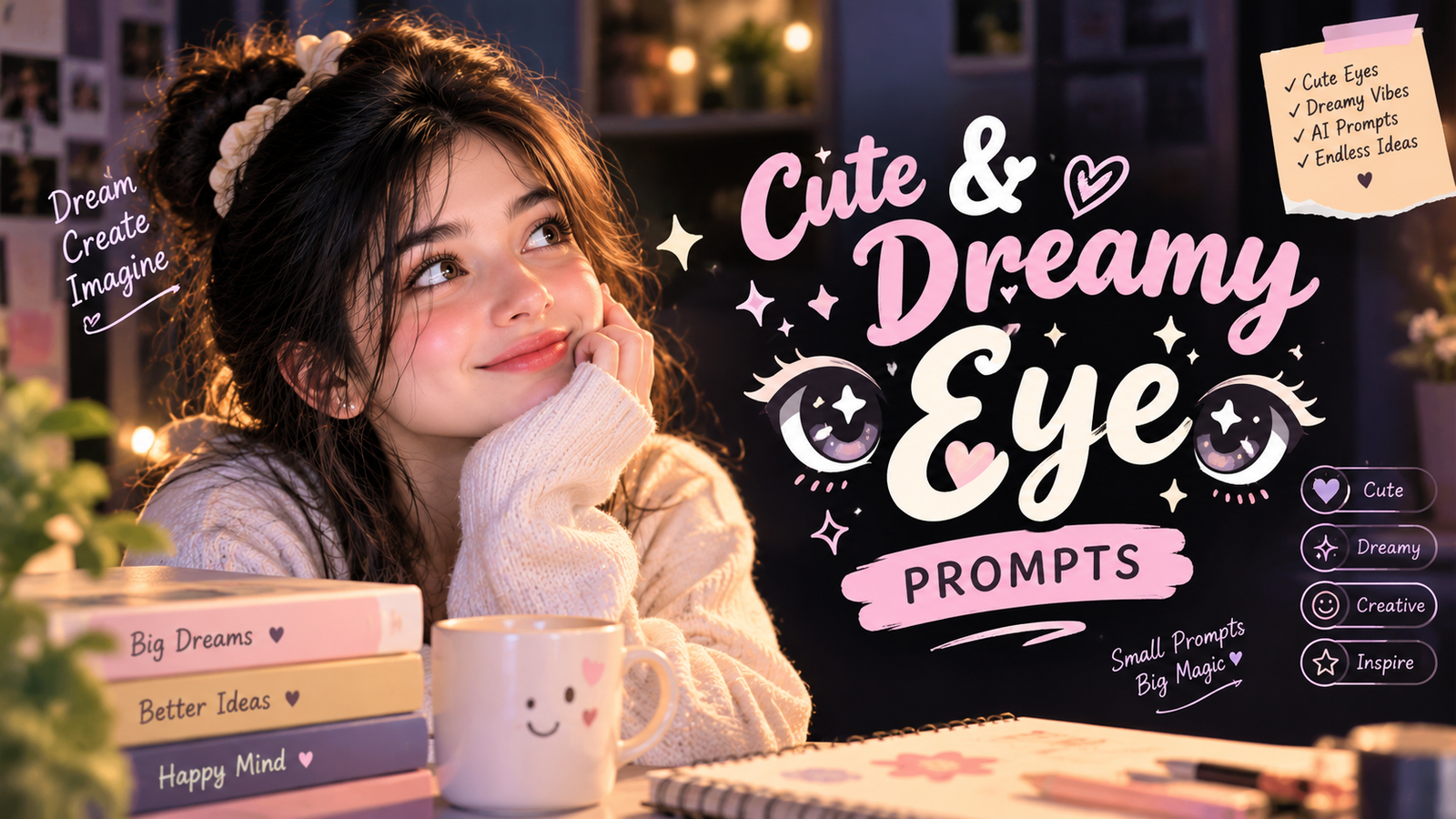
Cute & Dreamy Eye Prompts
View Prompts →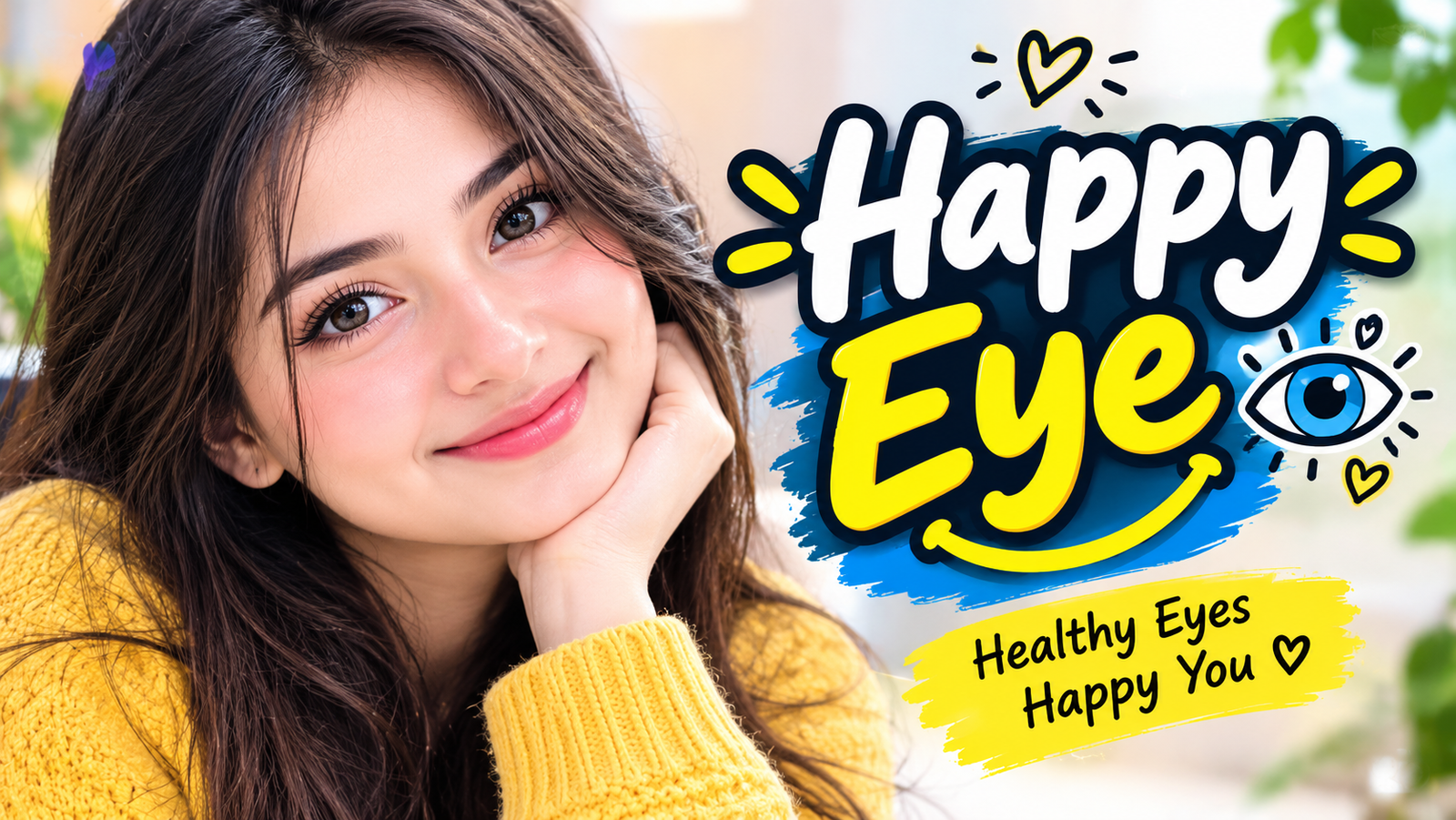
Happy Eye Prompts
View Prompts →Explore the Collections on This Page
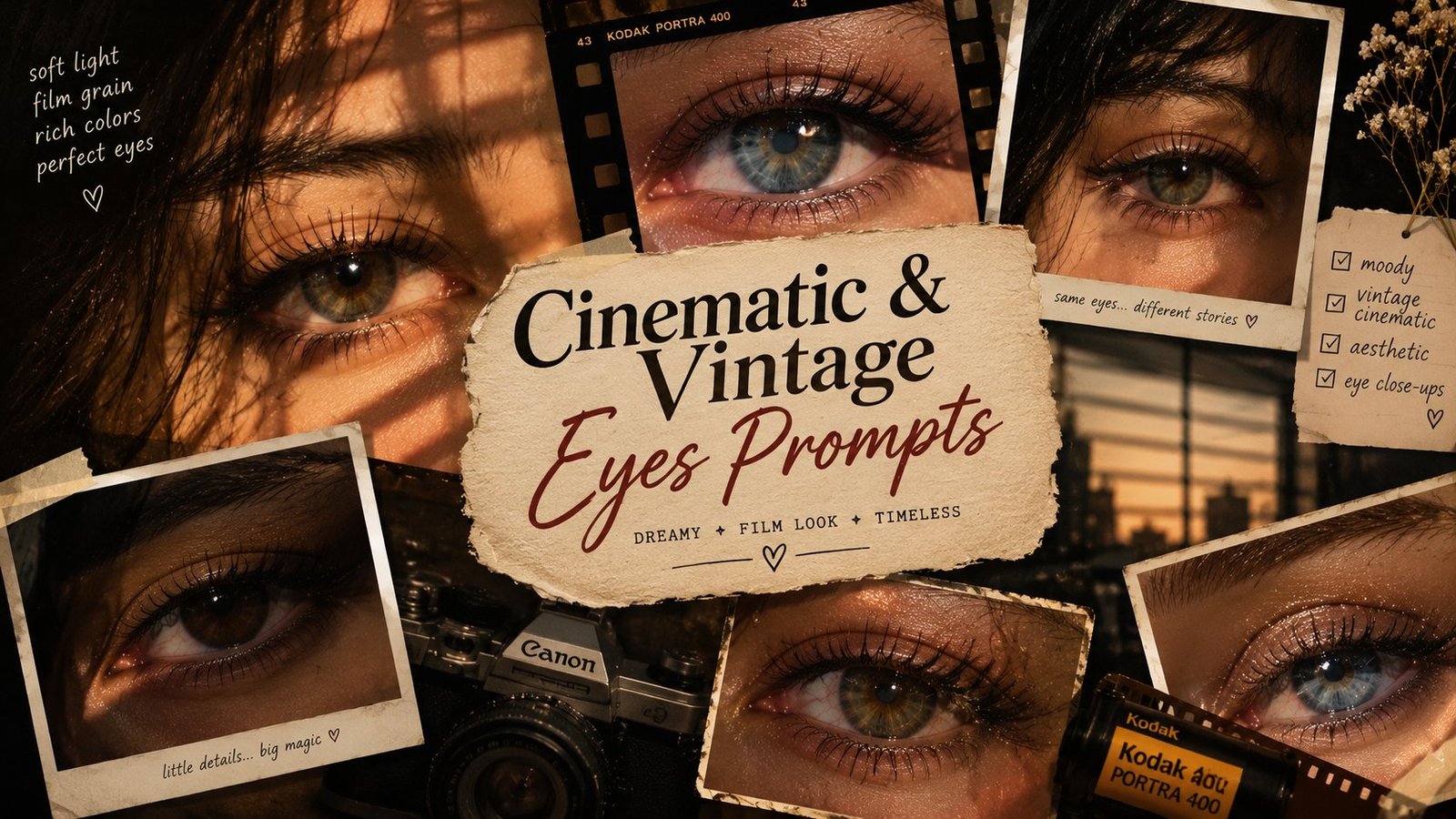
The Cinematic and Vintage collection gives your eyes a film photo look, warm grain, soft light and colours that feel timeless. Eye Color and Macro goes closest of all, turning the iris itself into the picture, with natural and fantasy colours in fine detail. Sad Eyes is the emotional shelf, teary and heartfelt close ups for quiet, expressive posts. Dark and Baddie goes the other way, bold, shadowy and full of attitude. Cute and Dreamy keeps things soft and sweet, with sparkly, gentle looks, and Happy Eye is the bright one, fresh, smiling eyes full of light. Pick the mood first, then open that collection and copy the prompt that fits your photo.
Pick Your Eye Mood
Soft and gentle. Choose Cute and Dreamy for sweet, sparkly looks, or Sad Eyes when the post is emotional and quiet.
Bold and striking. Choose Dark and Baddie for attitude, or Eye Color and Macro when you want the iris itself to do the talking.
Warm and bright. Choose Cinematic and Vintage for a timeless film feel, or Happy Eye for fresh, joyful light.
Tips for Eye Photos That Look Real
Start with your sharpest photo. A close up shows everything, so a slightly blurry original turns into a soft result. Pick the clearest eye photo you have.
Use a close up or crop tight. These prompts are written for eye focused frames, so a photo where your eyes are already large in the frame works best.
Face the light. A catchlight, the small bright reflection in the eye, is what makes an eye photo feel alive, and it only appears when light falls on your face.
Keep one mood per photo. Dreamy, dark, sad and happy styles fight each other in a single picture, so generate them as separate results.
Compare before you post. Put the result beside your original and check the eye colour and shape still read as yours, then post the one that does.